
AI Powered IT Courses in Telugu: Learn Cloud, DevOps, and Data Technologies Together
Modern IT systems are rarely built with one technology. A business application may run in the cloud, use databases to store information, rely on DevOps pipelines for deployment, and produce data that is analyzed through dashboards.
This is why learners increasingly benefit from understanding how cloud, DevOps, and data technologies connect.
AI Powered IT Courses in Telugu can help students learn these concepts in a familiar language while also understanding the English terms used in real IT environments.
Cloud Is the Infrastructure Layer
Cloud platforms allow companies to use computing resources without managing every physical server themselves.
Businesses can use cloud services for:
virtual machines
storage
databases
web applications
backup
analytics
security
Learners who understand cloud basics can better understand where modern applications actually run.
Azure is one example of a cloud-related learning path within the wider course portfolio.
DevOps Focuses on Software Delivery
Development does not end when code is written.
The application must also be:
tested
built
deployed
monitored
updated
DevOps focuses on making this process more consistent and automated.
Common areas include:
Git
CI/CD
containers
cloud deployment
monitoring
automation
AI can help explain pipeline errors or suggest configuration improvements.
However, production deployment should always be reviewed carefully.
Data Is Created by Every Application
Applications constantly generate information.
An e-commerce system records:
orders
customers
payments
products
returns
A support platform records:
tickets
resolution time
customer feedback
A cloud application may also generate:
usage logs
performance metrics
security alerts
This data can later be analyzed using tools such as SQL, Excel, Power BI, and Data Analytics platforms.
Data Analytics Connects Technology with Business Decisions
Data Analytics is one of the popular learning directions because organizations need people who can interpret business data.
A learner may use:
Excel
SQL
Power BI
data cleaning
visualization
reporting
Suppose a cloud-based sales application generates 1,00,000 transactions.
The analyst can query the data, prepare it, and create a dashboard.
This shows how cloud and data skills connect in real work.
DevOps Teams Also Use Data
DevOps is not only about deployment scripts.
Teams also monitor:
application uptime
CPU usage
memory
errors
deployment failures
response time
These are all forms of operational data.
Dashboards can help teams identify problems quickly.
This is another example of how data skills support technical roles beyond traditional analytics.
AI Can Support Cloud Troubleshooting
Cloud environments often generate long error messages and logs.
AI tools can help summarize them.
For example, a learner might ask:
What does this deployment error mean?
Which configuration should I inspect?
What are possible causes of this failed container?
AI can reduce the time spent understanding unfamiliar errors.
The final fix still needs technical verification.
AI Can Assist with DevOps Configuration
DevOps tools often use configuration files.
AI may help explain:
YAML files
pipeline stages
container settings
deployment scripts
It may also suggest corrections.
But automatically copying configurations into a production environment is risky.
A small mistake can affect availability or security.
Data Professionals Can Use AI Differently
A data learner may use AI for:
SQL query explanations
formula suggestions
summary creation
data-cleaning ideas
dashboard planning
The same AI technology supports different roles in different ways.
The important skill is understanding what the output means.
Java Full Stack Connects Naturally with Cloud and DevOps
Java Full Stack is another strong example of connected learning.
A learner may build a Java application locally.
Next, the application can be connected to:
a database
cloud hosting
CI/CD pipeline
monitoring
This creates an end-to-end project.
Instead of seeing development, cloud, and DevOps as separate subjects, learners can see how they work together.
Java with DSA Builds the Logic Foundation
Java with DSA plays a different role.
It strengthens:
problem solving
algorithmic thinking
coding efficiency
This foundation helps developers write better logic before moving into large application and cloud environments.
AI can explain algorithm choices, but the learner should still practice solving problems independently.
Cyber Security Must Be Included in the Picture
Cloud and DevOps introduce security responsibilities.
Teams need to think about:
access control
credentials
permissions
network exposure
secrets
vulnerabilities
Cyber Security therefore becomes an important complementary path.
A cloud system that is fast but insecure is not a successful system.
Digital Marketing Also Depends on Cloud and Data
Digital Marketing may seem unrelated, but modern marketing platforms are also cloud-based and data-driven.
Marketers use:
analytics platforms
advertising systems
CRM tools
automation platforms
reporting dashboards
They depend on data to evaluate campaigns.
This shows that cloud and data technologies influence both technical and business roles.
The Wider 32-Course Ecosystem
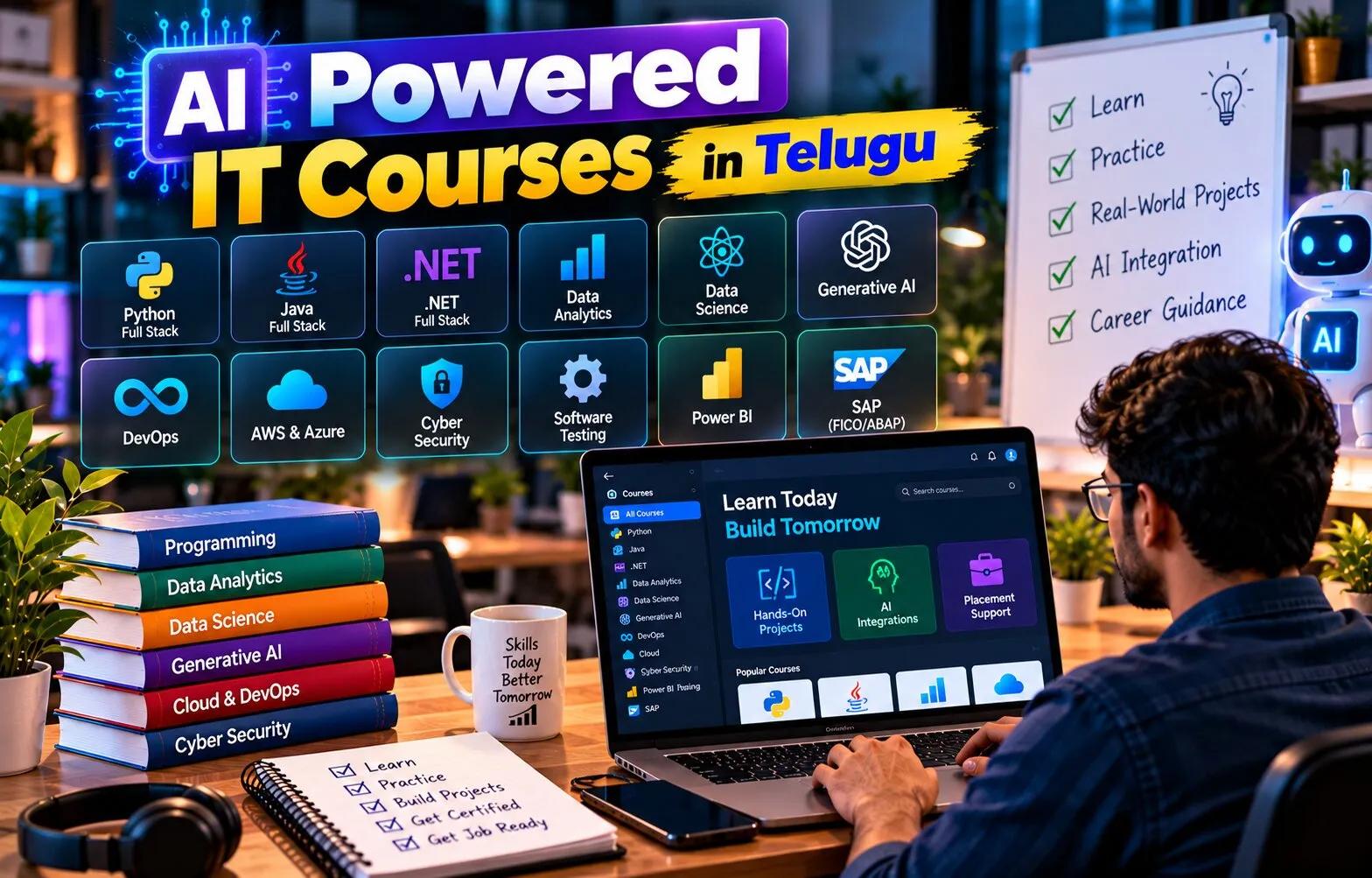
Frontlines Edutech offers 32 courses, giving learners multiple pathways across development, data, cloud, business technology, automation, and design.
Examples include:
Java Full Stack
Data Analytics
Java with DSA
Cyber Security
Digital Marketing
DevOps
Azure
SQL
Power BI
Excel
Data Science
Python
Generative AI
ServiceNow
Salesforce
SAP
Workday
.NET
Software Testing
Business Analytics
UI/UX Design
Machine Learning
A learner does not need all 32.
The advantage is having several related options when building a career path.
Example Career Combinations
A developer may combine:
Java Full Stack + DevOps + Azure
A data learner may combine:
Excel + SQL + Power BI + Data Analytics
A cloud learner may combine:
Azure + DevOps + Cyber Security
A business-tech learner may combine:
ServiceNow + automation + cloud basics
These combinations make learning more practical.
Build One Integrated Practice Project
A useful project could be:
Build a small Java application.
Store information in SQL.
Deploy the application to a cloud environment.
Create a basic deployment pipeline.
Collect usage data.
Create a Power BI dashboard.
Use AI to support debugging and documentation.
One project can demonstrate several connected skills.
Why Telugu-Based Learning Can Help
Terms such as:
pipeline
deployment
cloud instance
database
query
container
dashboard
monitoring
can feel difficult to beginners.
An AI Powered IT Courses in Telugu approach can explain these terms in Telugu while keeping the English technical vocabulary.
This helps learners build understanding without losing professional terminology.
Frequently Asked Questions
Should beginners learn cloud before coding?
Not necessarily. Many learners first build a core skill and then add cloud knowledge.
Is DevOps only for experienced developers?
No. Beginners can understand DevOps fundamentals, although deeper implementation becomes easier with development and system knowledge.
Does Data Analytics require cloud knowledge?
Not always, but cloud awareness becomes useful as organizations store more data in cloud environments.
Which popular courses connect well with these skills?
Java Full Stack, Data Analytics, Java with DSA, Cyber Security, and Digital Marketing can all connect with cloud, automation, or data in different ways.
Conclusion
Cloud, DevOps, and data technologies are closely connected in modern IT environments.
Cloud provides infrastructure.
DevOps improves software delivery.
Data helps organizations understand systems and business performance.
AI can support each of these areas by explaining errors, assisting with automation, and helping users interpret information.
AI Powered IT Courses in Telugu can help learners understand these connections while choosing a focused path from the wider 32-course portfolio.